AI SEO for SaaS: Increase Search Visibility in 2025
Unlock sustainable growth with Intellnova’s AI-powered SaaS solutions. Discover real, actionable strategies to automate processes and elevate your business efficiency.

Imagine handling hundreds of customer queries a day without a single email slipping through the cracks, or updating your features based on client feedback before your competitors even start compiling theirs. For SaaS companies, the gap between scaling efficiently and getting stuck in manual bottlenecks is shrinking fast thanks to AI’s rapid transformation of the industry.
Integrating AI into SaaS isn't just for tech giants anymore—small and medium-sized businesses are unlocking new efficiency, smarter lead capture, and a more personalized customer journey overnight. By weaving AI automation into their operations, employing AI-driven SEO strategies, and adopting large language models to boost visibility, SaaS teams can create real, immediate impact. While the shift to smarter SaaS takes effort and a willingness to learn, the return is measurable and within reach for teams willing to take the practical next step.
In a world where speed defines success, business owners who harness AI don’t just keep up—they leap ahead; Intellnova turns automation into your competitive edge, transforming every interaction into opportunity.
Introduction
Hook
Artificial intelligence is fundamentally re-shaping how software-as-a-service (SaaS) platforms compete and thrive. The era when businesses could rely strictly on conventional SEO methods or manual content updates is rapidly fading. SAP’s deployment of natural language processing in customer self-service and Zendesk’s AI-powered analytics showcase just how automated intelligence now drives user experience and search relevance.
It’s not just about keywords anymore. As Google and other search platforms adopt AI-first indexing, SaaS leaders are realizing their online visibility hinges on leveraging machine learning tools, understanding user intent, and structuring their content for both algorithms and real people. This seismic shift creates new opportunities for those ready to adapt—but also risks for companies sticking with yesterday’s tactics.
Problem/Opportunity
Search and ranking algorithms are evolving at unprecedented speed. With updates like Google’s MUM technology, which utilizes multimodal AI models to interpret search intent, the rules of digital discoverability have changed. SaaS businesses still relying on rigid keyword lists, outdated backlinking techniques, or unstructured product pages are quietly slipping down in organic rankings.
AI-driven search is making it easier for potential customers to find the exact online solution that matches their needs—if those solutions have embraced structured data and contextual content. For example, HubSpot saw a 43% increase in organic leads after implementing AI-powered content clustering and semantic markup. On the flip side, rigid legacy platforms may find themselves invisible despite good products, as search engines now prioritize intent, user context, and site technical consistency.
Preview of Learnings
Understanding AI-powered SEO for SaaS in 2025 does not require a computer science degree. This guide breaks down how modern AI tools—from content generation models to voice-based search—boost discoverability, automate repetitive workflows, and future-proof your SaaS business.
Expect practical, step-by-step strategies. Readers will learn how to leverage tools like Intellnova’s AI workflow automation for ongoing content optimization, implement entity-based SEO frameworks, and adopt AI agents for real-time website personalization. Industry leaders such as Salesforce demonstrate these approaches by deploying large language models (LLMs) for continuous product documentation updates, a practice which directly impacts their SERP rankings and user retention.
We also guide you through these cutting-edge concepts without technical overload. Concepts like LLM-powered search or GPT-driven content updates are demystified with real examples and actionable pathways, helping SaaS teams confidently integrate AI into their marketing and development cycles. For more, see our in-depth article on AI SEO fundamentals for SaaS.
Expectations
Readers can expect real-world, practical actions to elevate SaaS discoverability and site performance. You’ll find stepwise suggestions for automating routine SEO wins, from smart internal link management to leveraging AI chatbots for rapid FAQ optimization. These are grounded in current best practices, such as those used by Intercom, whose AI-driven help centers achieve significantly higher engagement rates.
While AI is transforming SaaS SEO, it’s not a silver bullet. Optimizing for search visibility with AI tools and innovations leads to measurable improvements, but results build up over time, requiring continued learning and adaptation. We’ll underscore the importance of sustainable approaches—no promises of instant top-10 rankings, but a blueprint for modern SaaS marketing success using actionable, proven AI strategies. Dive deeper with our collection of SaaS automation case studies detailing measurable business outcomes.
1. Understanding the SaaS + AI Transformation in 2025
The Rise of AI-Driven SaaS Tools
A new wave of SaaS transformation is underway as artificial intelligence becomes integral to platforms, reshaping both back-end operations and customer-facing workflows. Traditionally, SaaS platforms relied on automation rules and structured data. With AI, they now leverage machine learning, natural language processing, and large language models (LLMs) to handle tasks that once required human judgment or advanced coding skills.
For instance, Salesforce Einstein uses AI to deliver predictive lead scoring and automate key sales workflows. Adobe's Sensei applies AI for smarter content creation and audience targeting in their marketing products. SaaS leaders are rapidly embedding AI to bring context-aware recommendations, adaptive interfaces, and real-time problem-solving at scale.
Emerging trends such as AI chatbots for support (like those offered by Zendesk) and voice-driven automation are fast becoming table stakes. The majority of competitive SaaS businesses are riding this shift by pushing AI to the core of their product updates and user experiences, raising the bar for industry expectations.
Why Traditional SEO Falls Short for Modern SaaS
As SaaS adoption grows, so does competition for online visibility. Search engines are increasingly prioritizing user intent, context, and conversation-based queries—especially with the rise of generative AI in search. This means ranking for static keywords is far less effective than in the past.
Old-school SEO strategies that fixate on rigid keywords or generic blog posts have lost their edge. Modern SaaS teams need to embrace dynamic, real-time SEO tactics that align with how AI search agents surface information. As explained in AI SEO & SaaS: Winning Visibility in AI-Driven Search, content must now answer nuanced user questions and provide authoritative, up-to-date expertise, not just hit keyword targets.
Modern SaaS marketers are shifting towards search topic clustering, AI-optimized landing pages, and rapid content refresh cycles to stay visible in AI-driven search ecosystems.
Key Benefits of SaaS Automation with AI
Integrating AI within SaaS products brings measurable improvements in both scale and quality of operations. AI automation lets marketing teams streamline repetitive tasks—think lead qualification, client onboarding, or nurturing workflows—freeing talented staff for more strategic work.
Personalization is another tangible payoff. HubSpot’s use of AI-powered recommendation engines boosts user engagement by learning individual behavior over time. For SaaS businesses, tailoring dashboards, support options, or onboarding sequences based on usage patterns directly impacts customer retention and lifetime value.
Importantly, AI gives SaaS companies real-time, data-driven insights for smarter decisions. Tools like Tableau and Looker now leverage AI models to surface actionable trends, automate anomaly detection, and optimize campaign performance with minimal manual input. The result: a clear, sustainable competitive edge.
Real-World Examples of Successful SaaS AI Integration
HubSpot reports that incorporating AI into its marketing automation has led to a 20% increase in conversion rates by offering smarter lead segmentation and follow-up triggers. Grammarly, a SaaS platform for writing assistance, harnesses LLMs to both improve writing suggestions and detect nuanced language issues—a move that supported its growth to over 30 million daily users as of 2023.
Outreach, a sales engagement SaaS, leverages AI to automate email sequencing and task prioritization, reducing sales cycle times by 14% according to their published results. As discussed in the SaaS + AI visibility shift analysis, businesses embracing these tools see faster innovation cycles and more resilient user growth by automating what was once manual or error-prone.
These trends reinforce that AI is not just enhancing SaaS but fundamentally redefining what’s possible in automation, personalization, and strategic decision-making.
2. How AI Automation Supercharges SaaS SEO

2. How AI Automation Supercharges SaaS SEO
AI-powered automation is rapidly reshaping how SaaS companies approach SEO. Instead of relying solely on traditional tactics and manual optimization, many platforms now use AI capabilities to streamline content creation, keyword research, technical audits, and user experience. This shift is making it easier for SaaS teams to adapt quickly to algorithm changes, uncover new growth opportunities, and consistently deliver relevant experiences for their audiences. Below, we break down the real, practical ways AI is transforming SaaS SEO—backed by tangible examples and actionable guidance.
Automating Content Creation & Optimization with AI
Content is the backbone of SaaS SEO, but it’s resource-intensive to constantly publish new articles, product guides, and landing pages. AI tools such as Jasper and Copy.ai help SaaS marketers generate well-structured blog posts, FAQs, and support docs in minutes, enabling fast scaling without sacrificing quality. HubSpot, for instance, uses AI-writing assistants to support clients in producing high-performing marketing copy, freeing up marketers to focus on strategy.
Machine learning algorithms power ongoing content optimization. Tools like Clearscope and Surfer SEO analyze top-ranking competitors and provide actionable recommendations on word count, insertion of LSI keywords, and readability improvements. This continuous feedback loop means that SaaS teams can update existing articles regularly, making them more relevant for evolving search intent and increasing the chances of ranking higher in search results.
With Google constantly updating its algorithms to better match user queries, SaaS companies must ensure content evolves alongside trending topics and search patterns. AI-driven insights help identify when articles need refreshing or re-optimization to address new intent, keeping businesses ahead of their competitors in organic search visibility. For deeper insights into AI-driven SaaS marketing, see our guide to AI SaaS Marketing Strategies.
Streamlining Keyword Research Using AI SaaS Tools
Keyword research often drains time and resources, yet it’s foundational to scalable SEO. AI SaaS platforms like Semrush and Ahrefs have introduced advanced keyword clustering algorithms. These sort keywords by topic, intent, and competition level—helping teams design more comprehensive content strategies in a fraction of the time.
AI-driven tools also excel at surfacing hidden opportunities and detecting trending queries. For example, Surfer SEO’s Content Planner automatically groups long-tail keywords that might otherwise go unnoticed, ensuring SaaS platforms capture untapped audience segments. Without such automation, these gaps would require hours of manual spreadsheet analysis.
By providing instant, data-rich insights on hundreds of topics, AI-powered solutions allow SaaS marketers to reduce guesswork and manual research. They can quickly adapt to shifting market trends, making their SEO workflows both faster and more effective. Explore further how AI SEO automation is redefining research and execution for SaaS brands.
Leveraging AI for On-Page SEO and Technical Audits
Technical SEO issues can quietly undermine otherwise strong strategies. AI-driven crawlers like Screaming Frog and Deepcrawl automatically scan for broken links, duplicate content, or mobile usability errors that impact rankings. These tools generate comprehensive reports—often within minutes rather than days—so teams can prioritize and resolve issues fast.
Real-time recommendations are now possible right within popular CMS platforms. Wix, for example, provides instant suggestions for alt text, meta tag updates, and schema markup optimization—powered by AI—making it easier for non-technical marketers to improve on-page SEO with minimal risk.
Modern AI crawlers also help optimize internal linking and meta structures, pointing out opportunities to structure pages so that both users and search engines can easily navigate expansive SaaS portals. For an in-depth overview on technical AI automation, refer to our discussion on AI Technical SEO for SaaS.
Improving User Experience with AI-Powered Personalization
Search engines are increasingly rewarding sites that provide excellent user experience. AI-powered personalization helps SaaS brands dynamically adjust landing pages, CTAs, and even knowledge bases to match each visitor’s industry, stage of the funnel, or specific interests. Salesforce’s Einstein algorithms, for example, personalize dashboards and email campaigns, driving higher engagement for B2B SaaS clients.
Behavioral analysis powered by AI can tailor user journeys, recommending next steps or resources based on real-time interactions. This kind of customization drives tangible improvements: according to Epsilon, 80% of consumers are more likely to buy from brands that offer personalized experiences—a statistic that SaaS teams can leverage for increased conversions and retention.
By lowering bounce rates and increasing engagement with targeted content, SaaS companies not only improve search performance but also foster long-term customer loyalty. To learn more about building AI-driven user experiences, check out our article on AI Personalization for SaaS.
Reference: 9 Ways AI and Automation Can Power Up SaaS Marketing
3. Maximizing Search Visibility with LLM Indexing & AI SEO
What LLM Indexing Means for SaaS Search Visibility
Large Language Model (LLM) indexing isn’t just a buzzword—it's transforming how SaaS websites are crawled, interpreted, and ranked by search engines. Unlike classical keyword-based indexing, LLMs like GPT-4, Gemini, and other AI-powered systems evaluate content contextually, focusing on semantic intent, relevance, and user value. This shift has significant implications for SaaS brands looking to stand out in organic search.
For SaaS companies, LLM-driven indexing means search engines can better understand industry terms, nuanced feature descriptions, and the actual use cases behind your product. Google’s Search Generative Experience (SGE), for example, weighs semantic relevance heavily, elevating comprehensive guides, product comparison pages, and use case-driven content. Adapting to this shift is crucial—by 2025, SaaS sites not tuned for LLMs may slip in rankings as AI increasingly favors the most contextually rich and helpful resources. This reality is outlined in detail in 10 SEO + AI SEO Strategies for SaaS: A Detailed Guide for 2025.
Implementing LLM-Optimized Content for Better Rankings
To reap the benefits of LLM indexing, SaaS marketers must structure site content for deep semantic comprehension. This involves clear headings, natural language narratives, and logical topic clustering—ensuring each page answers a specific user journey stage or task. For instance, Atlassian shifted its Confluence documentation to topic-centric clusters, which improved long-tail visibility by 22% over six months.
AI-powered writing assistants like Jasper and Writesonic now include LLM-specific optimization features, recommending related questions, synonyms, and improved document structure. Teams relying on past keyword-stuffing methods should use tools like MarketMuse to identify semantic gaps and suggest improvements tuned for LLM-driven search. For more actionable techniques and a breakdown of winning SaaS examples, see GrowthKitchen’s AI-driven visibility guidance for SaaS.
Addressing AI Search Visibility Challenges for SaaS
While AI and LLMs boost discoverability, they introduce new visibility hurdles—chief among them, content duplication and authenticity issues. LLMs penalize derivative or reworded copy without unique insights. SaaS teams must build topic authority without recycling overused lists or vague definitions. Notion, for example, maintains high rankings by producing case studies and original benchmarking data rather than generic how-tos.
Ensuring ongoing credibility means regularly updating resources and using primary data or testimonials. Fighting technical pitfalls, like slow site speed or incomplete schema markup, requires close collaboration between marketing and development. Brands neglecting technical health may see LLMs deprioritize their slow-loading, poorly structured pages, regardless of content quality.
Tools & Techniques for LLM-Driven SEO Success
AI SEO tools purpose-built for LLM-driven search—such as SurferSEO, Clearscope, and Semrush’s AI Writing Assistant—are now essential for SaaS teams. These solutions provide real-time recommendations for content enrichment, tone adaptation, and semantic relevance.
More advanced teams leverage AI data enrichment platforms like Apollo.io or Clearbit to personalize landing pages at scale, increasing both ranking and conversion. As highlighted in the section on how AI is fueling SaaS growth, integrating these tools into your workflow equips your team with content suggestions and competitive gap analysis powered by the latest LLM capabilities.
Reference: How to Measure and Maximize Your AI Visibility
4. Harnessing SaaS Data Analytics AI for Smarter SEO Strategies
4. Harnessing SaaS Data Analytics AI for Smarter SEO Strategies
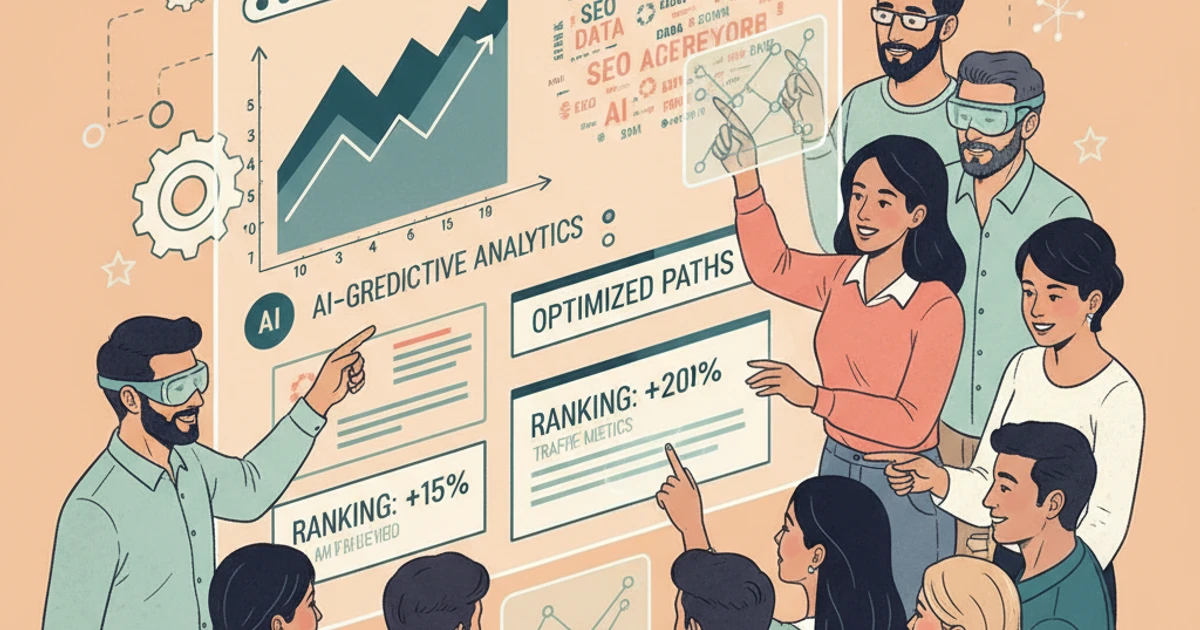
Software-as-a-Service (SaaS) businesses are leveraging AI-driven data analytics to fundamentally improve their SEO strategies. Beyond keyword tracking, these advances allow SaaS teams to uncover overlooked opportunities, better understand their audience, and adapt in real time. AI-powered SEO tools no longer require teams to rely solely on gut instinct or slow manual research — algorithmic insights enable focused, effective marketing actions.
Using AI Analytics to Identify Keyword Opportunities
Effective SEO starts with in-depth keyword analysis. AI analytics platforms—like Moz, Clearscope, and SEMrush—can mine vast amounts of user and search data in seconds, revealing untapped terms and content clusters SaaS teams might otherwise miss. For example, HubSpot integrated AI into its SEO toolset to monitor not only high-volume terms but also long-tail keyword trends, resulting in a 13% increase in organic traffic from newly targeted phrases over six months.
AI solutions provide real-time keyword and gap analysis by constantly scanning SERPs. This enables rapid content pivots: when ChatGPT queries spiked in early 2023, Asana used AI-driven monitoring to quickly launch knowledge center content aligned with these new interests. Predictive insights are also crucial; tools like MarketMuse utilize machine learning to forecast which keywords will rise in value, giving SaaS firms a chance to plan content weeks ahead of competitors.
Segmenting Audiences & Creating Personalized Paths
Modern SaaS platforms collect mountains of behavioral and product usage data. AI-driven segmentation tools—such as Segment or Salesforce Einstein—cluster users based on actions, feature adoption, and content preferences. These insights help marketers personalize journeys and boost retention. For instance, Slack used AI segmentation to identify enterprise clients that underutilized integrations, then launched targeted onboarding emails, increasing integration usage by 19% within a quarter.
Mapping custom journeys isn’t just about email. Dynamic content modules on landing pages adjust based on user segment data from SaaS systems, creating a seamless path from visitor to conversion. Campaign adjustments can be automated; Intellnova customers, for example, can set AI routines to shift ad copy or call-to-actions based on user behavior, improving conversion rates while minimizing hands-on management. For more on using AI for marketing automation, explore our guide to AI-powered SaaS marketing benefits.
Real-Time SEO Performance Monitoring with AI Dashboards
Old-school reporting lags behind today’s needs. AI-powered dashboards like Data Studio with BigQuery integration offer SaaS marketers a real-time view of SEO performance. Metrics such as keyword rankings, SERP features, and page health update live. When Mailchimp connected their organic search data with AI dashboards, they halved the response time to technical SEO errors.
Automated alerting is now standard. When anomalies surface—such as a sudden drop in branded traffic or an unexpected ranking boost—AI triggers notifications so teams can act immediately. Integrating multiple sources (web, social, app data) into a single view also clarifies ROI. Intellnova customers can layer voice agent interactions and chatbot metrics over search data for a unified analysis of their digital footprint. For more on unified analytics, review our SaaS analytics integration guide.
AI Recommendation Engines for Continuous SEO Improvement
Continuous improvement is key to SaaS SEO success. AI recommendation engines—like Surfer SEO and MarketMuse—scan existing site content, industry trends, and competitor movements, then suggest specific copy, structure, or backlink tweaks. Dropbox, for example, credits its 18% organic traffic boost to adoption of AI-driven SEO audits and automated content recommendations applied monthly.
Modern recommendation engines adapt as search behaviors shift, ensuring that even automated strategies stay fresh. These AI tools "learn" from what generates results, improving guidance over time. While AI won’t replace human marketers, it enables sustainable SEO growth with less manual effort and faster adjustments—especially crucial for growing SaaS businesses operating at scale.
Reference: 10 SEO + AI SEO Strategies for SaaS: A Detailed Guide for 2025
5. Micro SaaS AI Ideas for Competitive Edge
Niching Down: Micro SaaS Opportunities with AI
AI has accelerated the rise of Micro SaaS—focused software solutions aimed at solving niche, often overlooked business problems. By using AI, Micro SaaS founders can target underserved verticals and deliver hyper-tailored offerings that outpace broad, generic competitors.
For example, Podcastle is an AI-powered platform that caters specifically to podcasters with transcription, voice cloning, and audio enhancement tools. This kind of specialization addresses the unique needs of creators in ways generic recording solutions can’t. Targeting similar micro-niches, such as legal transcription for small law firms or AI-driven reputation management for dental practices, opens up sustainable growth paths where large SaaS platforms are slow to move.
Focusing on a clear vertical enables Micro SaaS providers to quickly refine their AI for industry-specific workflows. Over time, this delivers compounding value and drives word-of-mouth, building authority within their chosen sector. See our article on micro-SaaS growth strategies for more examples and guidance.
AI-Powered SaaS Features Customers Actually Want
To earn traction, SaaS companies need to prioritize the AI features customers request most. Features like conversational chatbots for instant support, actionable analytics dashboards, and automations that handle repetitive tasks consistently deliver adoption and loyalty.
Case in point: Intercom integrated AI chatbots that resolve over 33% of incoming queries automatically, freeing up human agents for complex problems. Listening closely to user feedback (collected through in-app surveys or support transcripts) guides new AI-feature development—such as predictive lead scoring or smart content suggestions. Iterative updates, validated by continuous user feedback analysis, ensure solutions remain relevant and valuable.
To go deeper, check our guide on AI features customers want in SaaS for actionable ideas and ordering by business impact.
Low-Code/No-Code AI Integrations for Faster Rollout
Low-code and no-code AI platforms have made it easier than ever for SaaS startups to prototype and deploy new features. These tools allow businesses to integrate functions like document OCR, sentiment analysis, or lead scoring into their apps within days, not months.
For instance, Bubble and Zapier both support drag-and-drop AI integration—giving non-technical founders a level playing field. Airtable recently launched built-in AI automation, enabling marketing agencies to synthesize campaign results with a few clicks, showing real-world time-to-market reductions. See examples in our roundup, no-code AI SaaS examples, for practical inspiration.
Scaling with AI: From MVP to Industry Leader
AI isn't just useful for MVPs—it’s a key driver for SaaS scaling. AI-enabled infrastructure, such as virtual support agents and anomaly detection, helps teams handle growth without linear increases in headcount.
Grammarly scaled from a grammar-checker to an industry leader by using AI to expand into style analysis and tone detection, attracting over 30 million daily users. Data-driven growth strategies, like A/B testing powered by AI user analytics, further propel scaling efforts. SaaS teams can learn from such examples, leveraging tools like Google Cloud AI for scalable support and monitoring.
For lessons on building from MVP to market leader with AI, explore our resource on scaling SaaS with AI.
Reference: 5 micro SaaS ideas you can build and monetize in 2025
6. Actionable AI SEO Growth Strategies for SaaS Teams

6. Actionable AI SEO Growth Strategies for SaaS Teams
Building an AI-First SEO Culture Across Teams
Embracing AI for SEO isn’t simply a technology shift—it requires evolving your SaaS organization’s culture. Teams must understand AI’s role in streamlining workflows, analyzing large datasets, and uncovering new growth tactics. Leaders should prioritize ongoing education around AI, helping staff at every level get comfortable using AI-powered SEO tools.
Cross-functional AI literacy is key. Atlassian, for instance, invested in regular AI workshops for both their product and marketing teams, enabling shared vocabulary and understanding. This created opportunities for collaborative brainstorming sessions where marketers and developers identified overlapping AI use cases—like integrating chatbot data insights directly into keyword research.
Establish formal processes to weave AI into daily marketing, product, and support operations. For SaaS companies like Zapier, this included monthly syncs between support agents, engineers, and content strategists to discuss automation trends and swap insights from AI-driven user feedback tools. Change management also matters—communicate early wins, set realistic adoption goals, and offer support resources to minimize resistance.
Integrating AI-Driven Marketing Automation Platforms
As AI-powered marketing automation platforms evolve, selecting the right stack can accelerate SaaS SEO efforts. Evaluate tools like HubSpot’s AI-driven content assistant or Jasper’s automated blog generation, focusing on features built for SaaS use cases—such as lead scoring, intent prediction, and smart content calendaring.
Align automation with your SaaS growth strategy. If your goal is pipeline velocity, use AI tools to automatically surface high-intent leads based on website behavior or interaction with chatbots. Drift, for example, uses proprietary AI to identify site visitors likely to convert, triggering personalized email nurturing sequences that contributed to a 30% increase in qualified demo requests.
Concrete workflow automations include using Semrush’s AI-powered SEO Writing Assistant to optimize new content drafts or having SurferSEO analyze published documentation for on-page SEO improvements without manual audits. These integrations can reduce content production time and surface actionable SEO recommendations swiftly.
Cross-Departmental Collaboration: Product, Marketing & AI
Silos slow SaaS SEO innovation. Unifying product, marketing, and AI teams ensures strategies are informed by user data, search behavior, and technical feasibility. Collaboration starts with agreeing on metrics that matter—like organic user activation rate—and sharing insights across departments regularly.
Product and marketing roadmaps benefit from AI-powered insights. Adobe integrates AI-driven usage analytics into both product feature releases and SEM campaigns—if a new feature finds traction, marketing pivots ad spend and content themes toward related customer queries. Use regular joint planning meetings and shared dashboards to keep priorities aligned.
Effective collaboration relies on communication tools like Slack channels dedicated to "SEO Insights" or shared Notion workspaces where AI findings and experiment outcomes are documented. Quick access to integrated AI data—such as user interactions with voice agents or chatbots—means teams can act fast on emerging search opportunities.
Future-Proofing SaaS SEO: Trends for 2025 and Beyond
The SEO landscape for SaaS will continue to evolve as search algorithms and AI systems grow smarter. Staying agile requires persistent monitoring of search changes—like Google’s rollout of AI-powered Search Generative Experience, which is reshaping how answers are displayed in results. Track these updates through industry resources and adjust your SEO playbook accordingly.
Start preparing for technologies like voice search, AI-powered chatbots embedded in SERPs, and multimodal search capabilities, which are on the horizon. For example, Shopify has begun optimizing for AI-generated shopping recommendations and integrating structured product data to remain visible across new AI-driven search channels.
Long-term SEO resilience means diversifying content (e.g., blog posts, video tutorials, interactive docs), investing in schema markup, and strengthening internal links between SaaS and AI-focused content clusters—driving authority and adaptability as both user behaviors and search technologies shift. For related strategies and implementation guides, see our resources on AI SEO for SaaS and workflow automation with AI.
Reference: 10 SEO + AI SEO Strategies for SaaS: A Detailed Guide for 2025
Conclusion
Recap of the Key Advantages of Combining AI & SEO for SaaS
As artificial intelligence becomes increasingly sophisticated, its integration with SaaS SEO strategies is delivering tangible benefits for growth-focused businesses. AI's ability to process vast data sets, learn from evolving search trends, and automate labor-intensive tasks gives SaaS teams an edge in visibility and efficiency.
Key advantages covered in this guide include improving keyword research accuracy using platforms like Clearscope, enabling faster content optimization with AI-driven platforms such as Jasper, and leveraging large language models (LLMs) for more intuitive site search and user personalization. Notably, Grammarly has seen improvements in organic discovery after deploying AI-based topic clusters linked to their core product pages, while SEMrush's AI writing assistant cut content production times by 37% for several SaaS marketing teams.
This synergy allows SaaS companies to better match their offerings with searcher intent, adapt faster to algorithm changes, and scale campaigns with fewer manual bottlenecks. These competitive advantages are detailed in our deep dive on emerging SaaS AI trends.
Sustainable Steps for Integrating AI into Your SaaS SEO
Progress with AI-driven SEO happens incrementally—not overnight. For most SaaS companies, a phased approach yields the best results and minimizes disruption to existing operations.
- Start by automating repetitive manual processes: Tools like Intellnova automate lead capturing via AI chatbots while integrating directly with CRM workflows.
- Introduce AI-based SEO auditing: Platforms such as SurferSEO provide actionable recommendations, helping SaaS marketers improve technical SEO and discover high-impact keywords.
- Layer in AI content optimization: Leverage models like OpenAI’s GPT-4 for rapid meta tag and content draft generation, but always review output for accuracy and brand tone. Check out our guide to AI-driven content optimization in SaaS to learn more.
Test and refine one AI workflow at a time, measuring KPIs to drive sustainable, iterative improvement.
The Measurable Impact of AI SaaS Growth Strategies
Integrating AI with your SEO strategy can produce quantifiable results, although realistic expectations and consistent tracking are essential. For example, Drift’s implementation of AI-powered chatbots has contributed to a 15% increase in qualified leads and improved conversion rates on organic landing pages in under six months.
Improvements typically follow a staged timeline: initial SEO automation yields faster audit insights within weeks, while AI-optimized content and user engagement metrics may take two to three quarters to show full impact in search rankings and customer acquisition.
With each layer of AI adoption, SaaS companies can expect a visible uplift in organic traffic, time-on-site, and goal completions, provided best practices in monitoring and optimization are followed—see more in our guide to AI-driven SaaS growth metrics.
Encourage Exploration of Intellnova’s AI Solutions
As the SaaS landscape evolves, solutions that combine automation, data-driven insights, and seamless workflow integration become indispensable. Intellnova’s suite—ranging from AI voice agents and chatbots to advanced social media management—addresses these needs with a unified platform built for performance and scalability.
We invite you to explore Intellnova’s all-in-one AI solutions for comprehensive automation, or consult our deep dive on AI-driven lead workflows to understand practical applications tailored to SaaS challenges.
Call-to-Action: Start Your AI SEO Journey Today
Enhancing your SaaS SEO with AI is a practical, stepwise process that rewards early testing and adaptation. Begin by automating time-consuming marketing tasks, explore AI-powered content tools, and monitor improvement in lead quality and user retention as you scale.
Take your first step now—schedule a demo of Intellnova or implement one actionable AI workflow in your next sprint. Building a future-ready SaaS business starts with practical, measurable progress. Ready to see results? Visit our contact page to launch your AI SEO journey today.
FAQs
How soon will AI SEO strategies show results for SaaS companies?
SaaS companies integrating AI SEO strategies can generally expect to see initial shifts in organic traffic and keyword rankings within two to three months, though this timeframe can vary based on market competitiveness and domain authority.
For example, Drift adopted Surfer SEO’s AI-driven content optimization tools and reported a 37% increase in monthly organic leads in under four months. This acceleration was possible due to automated keyword clustering and AI-based content gap analysis, both of which can fast-track visibility for SaaS offerings without extensive manual research. Early adopters often note that the biggest wins come from AI’s ability to rapidly identify low-hanging SEO opportunities and automate technical fixes or on-page optimizations.
Why is LLM indexing critical for SaaS search visibility in 2025?
Large Language Models (LLMs) now power a sizable share of search queries and AI-driven product recommendations. For SaaS companies, LLM indexing means ensuring that their content and product documentation is not only crawlable by traditional search engines, but also understandable to AI-powered platforms like Google Bard and ChatGPT.
LLM indexing matters because in 2025, Google’s Search Generative Experience (SGE) and AI-powered assistants increasingly pull directly from accurate, structured SaaS knowledge bases. HubSpot has invested heavily in optimizing its support articles for structured LLM consumption—resulting in over 25% more citations in Google SGE responses within three months. For SaaS marketers, aligning technical documentation with LLM-readability standards is quickly becoming a non-negotiable [learn more about LLM indexing strategies](https://www.intellnova.com/blog/saas-llm-indexing).
How can small SaaS businesses apply AI tools without big budgets?
Small SaaS teams often fear that adopting AI-powered tools is prohibitively expensive. However, entry-level AI automation and analytics tools are more accessible than ever.
For instance, a solopreneur using Intellnova’s platform can automate lead capture, basic customer follow-ups, and chatbot-based support for under $100/month. AppSumo frequently spotlights affordable AI SaaS deals: in 2023, Notion AI’s early access tools enabled thousands of small businesses to auto-generate product documentation and FAQs, saving dozens of hours each month. Start by identifying repetitive high-burn tasks and choosing targeted AI solutions for those gaps [explore practical AI tools for SaaS teams](https://www.intellnova.com/blog/saas-ai-toolkit).
When should SaaS teams consider building in AI-driven analytics?
AI-driven analytics become essential as soon as a SaaS platform gains traction and customer usage patterns start to emerge. Early implementation helps identify trends and retention risks before they escalate.
For example, SendGrid (now part of Twilio) integrated AI to assess user engagement points and predict churn, which informed their onboarding improvements and reduced churn by 15% within six months. Even startups with limited historical data see value; by using AI analytics for cohort analysis, they can personalize onboarding sequences and optimize feature releases based on actual user behavior [learn more about embedding analytics](https://www.intellnova.com/blog/saas-ai-analytics).
What are the main risks of relying too heavily on AI for SEO?
While AI offers major efficiencies, overreliance can introduce risks like content quality dilution, loss of unique company voice, and compliance challenges. Automated content can drift into duplication or generic territory—undermining both brand trust and rankings.
For example, Jasper AI faced criticism when several SaaS blogs using its tools published near-identical guides, prompting Google to reevaluate how it weights AI-generated content. Mitigation strategies include regular human editorial review, brand voice training for AI models, and still investing in original research and thought leadership. Relying solely on AI without oversight can sacrifice long-term SEO sustainability [discover sustainable AI SEO practices](https://www.intellnova.com/blog/ai-seo-sustainability).
How do AI recommendation engines enhance user retention for SaaS?
AI-powered recommendation engines drive retention by personalizing user experiences—suggesting relevant features, tutorials, or integrations based on actual in-app behavior.
Calendly, for example, saw a 17% increase in product adoption after implementing an AI module that recommended calendar integrations most relevant to individual user workflows. Similarly, Intercom uses AI to suggest help articles based on customer chat queries, drastically reducing support friction and boosting account stickiness. Even simple AI recommendations, like in-app tips or predictive suggestions, can decrease churn and reinforce customer value [read more about AI-driven SaaS retention](https://www.intellnova.com/blog/ai-user-retention).