AI Trends 2025: Real Impacts on Jobs and Daily Life
Discover key AI trends for 2025 and their impact on jobs and business. See how Intellnova's tools help automate, scale, and future-proof your workplace.


Walking into work, you greet your AI voice assistant as it updates you on client feedback gathered overnight and schedules your meetings for the day. This isn't a distant sci-fi fantasy—it's the new normal for many growing businesses. As AI tools become more advanced, they're seamlessly weaving into every aspect of operations, from marketing campaigns to customer service, changing not just the way work is done, but who does it.
The pace of AI adoption in 2025 challenges old routines and assumptions about what can be automated, what jobs are evolving, and how companies create value. Whether you’re looking to stay competitive or searching for ways to streamline repetitive tasks, understanding these technology shifts empowers smarter decisions. Discover how emerging trends like agentic AI, new automation tools, and practical business applications can drive sustainable growth—and what adapting to these changes really takes.
As AI goes from hype to everyday reality, the question for small businesses isn’t if their work will change, but how fast—and whether Intellnova’s intelligent automation will put them ahead or leave them catching up.
Reference: The 2025 AI Index Report | Stanford HAI
Introduction
AI’s Rapid Evolution and Its Real-World Impact
Artificial intelligence has evolved dramatically over the past few years, moving from specialized research labs into daily business operations. The visible effects extend far beyond Silicon Valley: adoption rates are soaring as AI becomes accessible through practical, business-ready products. According to a 2023 PwC survey, 54% of U.S. companies accelerated their AI adoption plans in just the previous year. Tools like OpenAI's ChatGPT, Google's Vertex AI, and Salesforce Einstein offer tangible productivity boosts for organizations of all sizes.
This surge in AI capability presents both significant challenges and unique opportunities for small and medium businesses (SMBs), digital marketers, and entrepreneurs. Established players such as Hootsuite have integrated AI to schedule posts at optimal engagement times, while SMBs like Chicago-based restaurant chain Wow Bao scaled customer engagement using AI-driven voice agents. Rapid adoption can present hurdles regarding implementation, ethical use, and customer trust—but it also opens doors to increased efficiency, enhanced communication, and improved scalability.
Looking ahead to 2025, the AI landscape promises even more actionable advancements. Key trends to watch include the rise of agentic AI—systems that use automation to make independent decisions—along with robust tool ecosystems and practical integrations. For SMBs, digital agencies, and growth-focused entrepreneurs, understanding these trends is crucial to staying competitive and delivering seamless customer experiences.
This guide is designed to move past hype and buzzwords. It provides practical, forward-thinking advice to help businesses navigate AI’s trajectory—focusing on results, strategic opportunities, and specific tools that offer real value in everyday operations.
1. The State of Artificial Intelligence in 2025: Setting the Stage
AI Trends 2025 and Why They Matter
AI in 2025 is marked by rapid growth in machine intelligence and its integration across core business processes. Remarkably, platforms are now combining natural language processing, real-time data analysis, and multi-modal learning to deliver results with unprecedented speed and accuracy. The shift is not just in smarter algorithms but in how these systems augment decision-making and streamline workflows.
Trends like enhanced intelligence, advanced reasoning, and scalable automation are driving transformation for businesses. For example, McKinsey's 2025 AI workplace report highlights five major innovations, including employee superagency and collaborative intelligence. Businesses deploying these solutions have achieved up to 30% productivity gains within marketing and client management divisions.
Automation to Agentic AI: The Next Evolution
Traditional automation focused on speeding up repetitive tasks—like email sorting or form filling—using scripted rules. In contrast, agentic AI represents a leap toward systems with reasoning capabilities and autonomy. These agentic agents adapt to context, learn from new data, and even make complex decisions formerly reserved for humans.
In real terms, agentic AI is powering customer service chatbots that handle escalation, sentiment analysis, and even sales follow-ups without manual intervention. For instance, Intellnova’s voice agents can autonomously schedule meetings, manage common support issues, and recommend next-best actions in sales, all while learning from customer interactions over time.
Key Milestones in 2025’s AI Landscape
2025 has already seen several groundbreaking AI milestones influencing both business operations and consumer experiences. Major cloud providers integrated generative AI directly into productivity suites—Microsoft Copilot and Google Workspace AI are now central to document, email, and data analysis workflows for millions of users globally.
Another striking development is enterprise adoption of AI-driven compliance monitoring tools. Banks such as JP Morgan have implemented real-time transaction analysis, reducing fraud detection time from days to minutes, further demonstrating the ecosystem’s maturity and practical benefit.
Intellnova’s Role in AI Evolution
Within this changing environment, Intellnova has become a key innovator by delivering AI solutions tailored for small and medium-sized enterprises. Its multi-channel chatbots are now used by over 500 digital marketing agencies to automate lead qualification and personalize outreach campaigns.
Intellnova’s AI-powered marketing automation suite integrates with platforms like HubSpot and Salesforce, enabling businesses to dynamically adjust campaigns based on customer sentiment, behavior, and conversion data—cutting ad spend by up to 20% and improving engagement rates substantially. As businesses navigate 2025’s AI landscape, Intellnova stands out for practical, scalable, and effective implementations.
2. Workforce Transformation: How AI is Changing Jobs in 2025
2. Workforce Transformation: How AI is Changing Jobs in 2025
AI-Driven Job Displacement: Reality vs. Myth
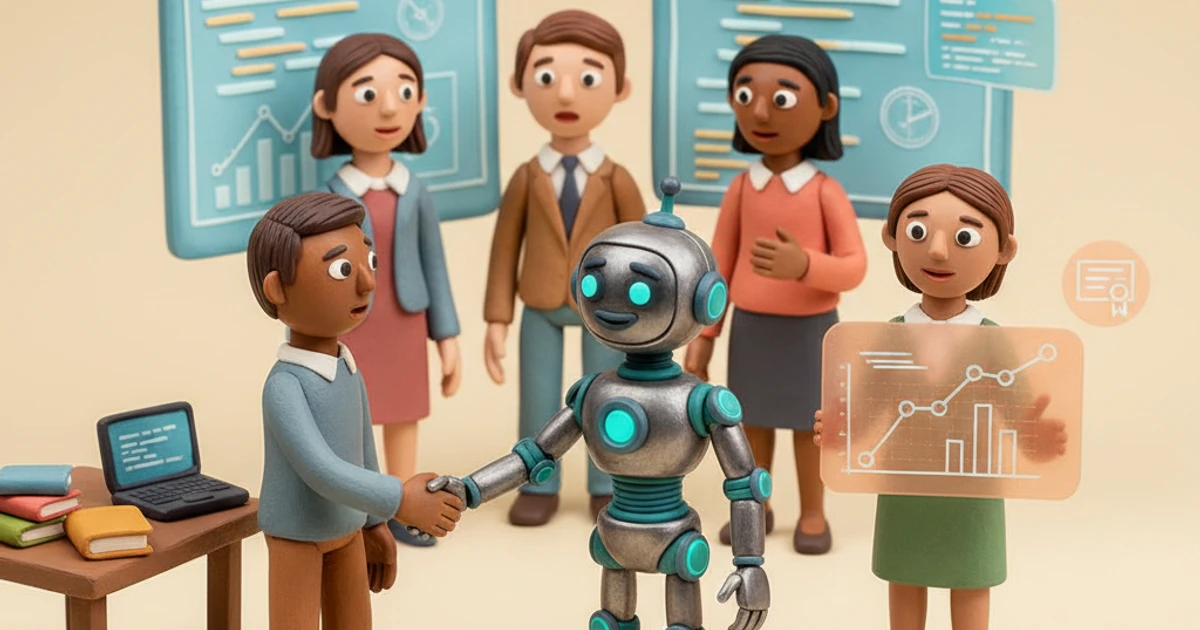
The conversation around AI often centers on fears of widespread job losses, but the true impact is more nuanced. Certain sectors face real risk, yet others experience transformation as roles evolve rather than disappear.
According to the World Economic Forum (WEF), by 2025, 85 million jobs may be displaced by machines, but 97 million new roles are expected to emerge due to automation and augmentation. Automation’s most significant impact is projected in routine administrative roles, while demand grows for tech-savvy and creative positions. Deloitte’s 2024 survey of U.S. SMBs found that 38% of leaders expect a shift in staffing needs—not outright downsizing.
New Roles and Skills Emerging in 2025
AI adoption fosters demand for novel positions and critical new competencies. Data-centric roles—like AI trainers, prompt engineers, and data ethicists—are now highly sought after. For example, LinkedIn’s 2024 Emerging Jobs Report lists AI Product Manager and Conversational AI Designer among its top-10 fastest-growing roles.
The trend also extends to traditionally non-technical roles. Marketing agencies now seek professionals adept in leveraging AI-powered social media management platforms. Intellnova users, for instance, report a 40% jump in productivity after adopting AI-driven client communications and campaign analysis.
Case Studies: Intellnova & Hiring Transformation
Companies are reimagining how they source and assess talent with platforms like Intellnova. By utilizing automated AI voice agents during pre-screening, one Midwest-based recruiting agency reduced average time-to-hire by 23% in 2024.
In retail, digital-first brands, such as Warby Parker, have integrated AI-driven chatbots for candidate screening, enabling hiring managers to focus on more strategic interviews. This strategic automation not only enhances efficiency but also creates a robust talent pipeline.
Strategies for Employee Upskilling
Maintaining workforce relevance requires a proactive approach to learning. Successful organizations invest in ongoing digital literacy programs and hands-on AI workshops.
For example, Intellnova offers clients access to micro-learning modules that target specific tools like chatbots or automated marketing analytics. Businesses such as Atlanta-based Digidrive Media report that bi-quarterly AI skills training has resulted in a 22% increase in staff utilization of automation solutions, leading to measurable gains in client satisfaction.
Reference: How Generative AI Is Reshaping Work in 2025
3. Agentic AI Explained: What Businesses Must Know
Defining Agentic AI and Its Relevance
Agentic AI refers to self-directed, adaptive systems capable of pursuing goals, making decisions, and carrying out multi-step tasks without step-by-step human guidance. These systems analyze contexts, learn from feedback, and autonomously take action to fulfill business objectives. Their "agency" distinguishes them from traditional automation by enabling independent problem-solving and task execution.
For small and medium-sized businesses (SMBs), agentic AI unlocks efficiencies previously limited to enterprise budgets. By automating complex workflows and customer interactions, SMBs can scale operations despite lean teams or resources. The latest McKinsey report on AI in the workplace highlights how AI agents are now handling end-to-end processes, from customer dialogues to seamless follow-up actions.
Real-World Applications of Agentic AI
The deployment of agentic AI is visible across various business functions. For instance, Intellnova’s AI-powered voice agents enable organizations to answer customer questions, process renewals, and collect payments—even after hours. These tools don’t just transcribe interactions; they can take next steps on their own, such as scheduling appointments or updating CRM records.
Another clear example comes from large retailers using advanced chatbots. H&M’s Ada chatbot deflects 60% of queries, resolving customer requests end-to-end without human involvement. Workflow automation tools, like those offered through Intellnova’s platform, coordinate tasks between marketing, support, and sales, reducing lead response times and operational friction.
Practical Benefits for Business Operations
Integrating agentic AI elevates both external and internal communications. In customer service, these solutions respond instantly and accurately, improving resolution rates. For example, Delta Air Lines saw a 20% decrease in support wait times after introducing agentic chat solutions to their helpdesk.
Internally, dynamic AI workflow agents route requests, gather project updates, and automatically report results to stakeholders. This boosts transparency and allows teams to focus on strategic growth initiatives rather than repetitive coordination tasks.
Deployment Best Practices
To effectively harness agentic AI, businesses should begin with high-impact pilot areas—like customer inquiry management or lead qualification. Ensuring integration with existing tools, such as CRM or ticketing systems, is crucial for scalability. Ethics should guide deployment as well: limiting sensitive decision-making, maintaining audit trails, and including opt-outs for users.
Ongoing training for both staff and AI models improves performance. Reviewing performance metrics and gathering team feedback helps refine use cases without introducing workflow disruptions. These strategies ensure that agentic AI augments human productivity responsibly across business operations.
Reference: Agentic AI explained: When machines don't just chat, but act
4. AI Tools Everyone is Using in 2025: Essential Solutions for Growth
4. AI Tools Everyone is Using in 2025: Essential Solutions for Growth
Overview of Leading AI Tools
The adoption of AI technology has become mainstream by 2025, with a growing reliance on platforms that enable smarter marketing, communication, and sales operations. Businesses are investing in solutions that automate repetitive tasks, personalize customer interactions, and uncover deeper data insights.
Some of the most popular AI-powered platforms include HubSpot’s AI Content Assistant for automated blog and social post generation, Salesforce Einstein for AI-driven sales forecasting, and Drift’s AI chatbots for real-time lead qualification and customer engagement. In marketing, Hootsuite’s OwlyWriter and Jasper.ai have seen widespread uptake among agencies for generating campaign copy efficiently. Microsoft Copilot, already deployed in many Fortune 500 companies, is being used to summarize meetings, analyze data trends, and enhance collaboration within teams.
Intellnova’s Integration Solutions
Integrating multiple AI tools without siloing data or duplicating workflows presents a major challenge for small and medium businesses. Intellnova addresses this pain point through a unified platform, providing seamless integrations for voice agents, AI chatbots, and marketing tools.
For example, a mid-sized e-commerce retailer used Intellnova to synchronize customer chat history with personalized marketing campaigns, leading to a 22% increase in customer retention over six months. By centralizing AI-driven communications and analytics, Intellnova helps teams eliminate process bottlenecks and gain actionable, cross-channel insights.
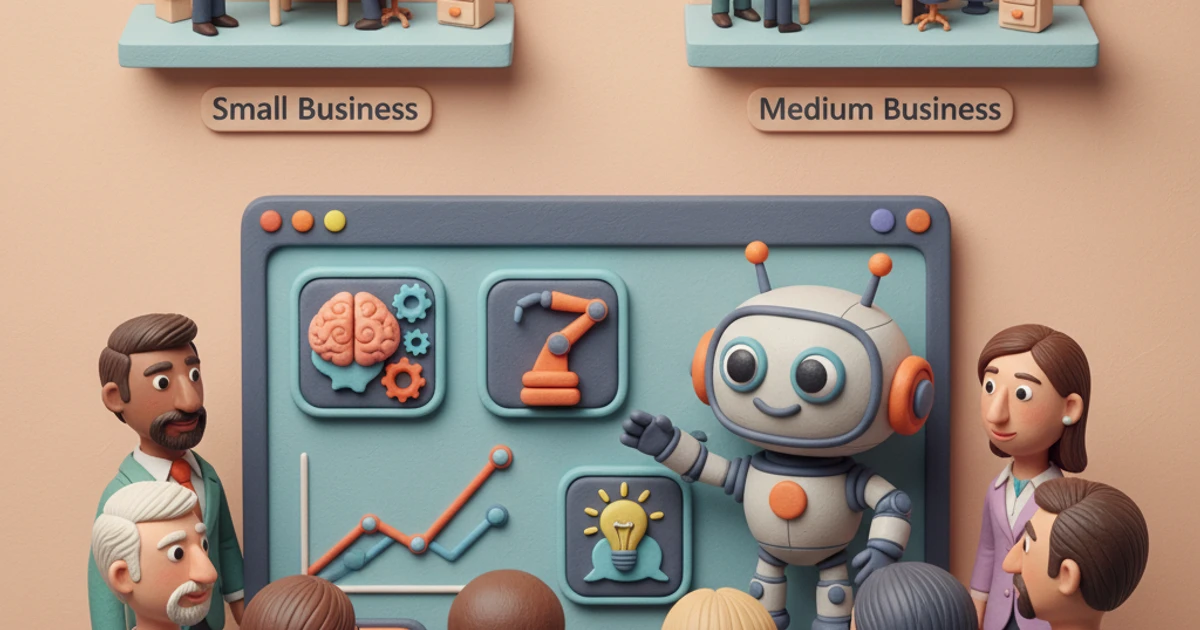
Adoption Patterns: Small vs. Medium Businesses
While nearly 68% of medium-sized businesses have implemented at least two AI tools according to the 2024 SMB Digital Transformation Report, smaller businesses are typically more selective, piloting one solution at a time to limit complexity and ensure ROI.
Medium enterprises often integrate comprehensive AI suites, such as combining Salesforce Einstein with AI-powered support desks. In contrast, boutique marketing agencies tend to opt for specialized tools, such as Jasper for copywriting or Intellnova chatbots for website inquiries, gradually expanding as confidence grows and results materialize.
Action Steps for Selecting AI Tools
Selecting the right mix of AI solutions requires a structured approach to avoid wasted resources and disruption. Businesses should start with a clear understanding of pain points and desired outcomes.
- Identify specific business needs or bottlenecks (e.g., lead qualification or customer support response times).
- Research tools with proven track records—check case studies, third-party reviews, and available integrations. For instance, review G2 or Capterra for unbiased feedback.
- Prioritize solutions that offer scalability and integration with existing workflows, minimizing data silos.
- Pilot one AI tool, measure its direct impact (e.g., reduction in manual workload or increased engagement), then scale adoption based on clear ROI data.
By focusing on business-aligned criteria, organizations can ensure that every AI investment directly supports growth and operational efficiency.
Reference: The 45 Best AI Tools in 2025 (Tried & Tested)
5. Daily Life with AI: How Artificial Intelligence Impacts Businesses and Consumers
Personalization and Customer Engagement
Artificial intelligence is transforming how brands connect with consumers by generating personalized experiences at scale. Using advanced algorithms, businesses can now analyze customer interactions, purchasing data, and behavioral trends in real time.
For instance, Amazon leverages AI models to recommend products tailored to each shopper’s browsing and purchase history. These recommendations account for over 35% of Amazon’s revenue, demonstrating how personalization boosts engagement and sales. Similarly, Starbucks uses its Deep Brew AI engine to create individualized offers, driving increased app usage and loyalty program sign-ups.
Business Automation in Practice
AI-driven automation eliminates repetitive manual tasks, freeing up time and resources for strategic initiatives. Scheduling, content creation, and lead management are among the daily responsibilities now managed by intelligent systems.
Salesforce Einstein automates lead scoring and follow-up, helping sales teams prioritize the most promising prospects. On the content creation front, tools like Jasper AI generate high-quality marketing copy in seconds, reducing creative turnaround times. Automated social media scheduling platforms such as Buffer harness AI to optimize posting times based on audience engagement patterns.
AI Streamlining Business Functions
Platforms like Intellnova integrate AI-powered voice assistants, chatbots, and marketing automation in one unified solution to streamline everyday operations. These tools handle initial customer queries, schedule meetings, and launch targeted campaigns without human intervention.
For example, Intellnova’s voice agents can manage inbound calls, answer FAQs, and route prospects to the appropriate team. The platform's automated social media manager listens for industry trends and publishes relevant posts, allowing businesses such as digital marketing agencies to maintain a consistent and responsive presence online.
Maintaining Human Connection
While AI boosts efficiency, authentic human interaction remains essential for building trust and loyalty. The key to balance lies in clear boundaries—deploy automation for routine processes but reserve nuanced issues for people.
Strategies include enabling seamless transitions from chatbots to human agents for complex requests and training staff to intervene when empathy is required. Companies like Zappos blend AI-powered customer support with empowered representatives, ensuring no customer feels like a transaction, even as automation handles high volumes of inquiries.
Reference: 10 Real-Life Examples of how AI is used in Business
6. Looking Ahead: The Future of AI in 2026 and Beyond
6. Looking Ahead: The Future of AI in 2026 and Beyond
Predictions for AI Trends in 2026
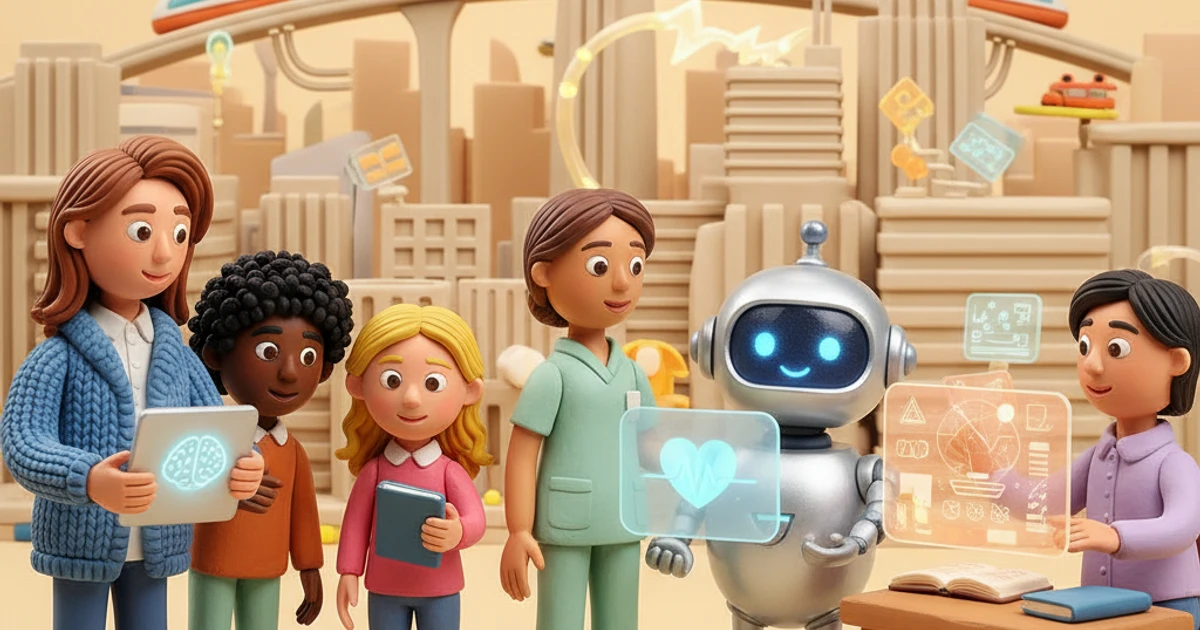
AI is expected to accelerate across multiple sectors by 2026, shaping not only how businesses operate, but how consumers interact with technology daily. Cloud-based AI platforms will likely offer even more accessible and scalable solutions, empowering smaller agencies and businesses to leverage advanced capabilities.
One anticipated trend is the increasing sophistication of generative AI, exemplified by platforms like OpenAI's GPT-4 and Google's Gemini, which already power advanced chatbots and content creators. By 2026, these models will offer deeper personalization and multimodal abilities—paving the way for AI agents that seamlessly analyze voice, image, and text inputs.
Next-Generation Advancements
Several areas are primed for rapid innovation. Agentic AI, or AI systems that can plan and execute complex tasks with minimal oversight, will begin to enter mainstream business applications. For example, Salesforce has piloted AI agents that autonomously handle lead qualification and follow-up, freeing sales teams to focus on high-value interactions.
Predictive analytics tools, such as those used in HubSpot's AI-powered marketing recommendations, are expected to become more accurate by leveraging real-time data. Fully autonomous systems—ranging from self-optimizing ad platforms to AI-managed customer service—are set to become more prevalent among SMBs looking to streamline repetitive workloads.
Preparing for Continued AI Evolution
Adapting to AI's rapid pace of change requires agile strategies. Businesses should prioritize technology investments that offer easy integration with existing workflows, such as Intellnova’s AI-driven communication tools that plug into CRM and marketing platforms.
Teams can stay ahead by establishing internal AI task forces or pilot programs. For instance, H&R Block regularly incorporates AI into client management processes and adjusts training based on performance analytics, positioning itself at the forefront of customer service automation.
The Importance of Ongoing Education
Continuous learning is essential for keeping pace with AI advancements. Upskilling initiatives—such as Coursera’s AI for Everyone or Google’s AI certification programs—equip employees with current knowledge to maximize new AI solutions’ effectiveness.
Incorporating structured learning paths ensures that marketing, sales, and support teams remain competitive. While not every company can access high-profile corporate training, small businesses can leverage affordable online courses and webinars to keep their workforce AI-ready for the coming years.
Reference: Tech predictions for 2026 and beyond
Conclusion
Key Takeaways and Next Steps
Embracing workforce transformation through agentic AI has shifted the daily realities of business operations. Today, companies like Intellnova enable small and medium-sized businesses to automate client communication using advanced voice agents, allowing sales teams to handle over 30% more leads per month without additional staff.
The integration of AI-driven tools goes far beyond simple chatbots. For example, Hootsuite’s AI-powered social media tools help digital marketing agencies like Ignite Visibility reduce campaign management time by 27%, enabling them to focus on strategy rather than repetitive tasks. The ripple effect is clear: organizations are seeing increased efficiency, more consistent customer engagement, and opportunities to scale operations without exponentially increasing overhead.
Embracing 2025’s AI Trends for Sustainable Growth
With the rapid evolution of AI capabilities, proactively adopting upcoming trends is critical for staying relevant. A 2024 Gartner report found that 55% of SMBs planning to scale in 2025 have already invested in at least one AI-powered automation platform. Delaying adaptation risks not only missed efficiencies but potential competitive setbacks as early adopters deliver faster responses and more personalized client experiences.
Organizations such as Drift have already demonstrated the bottom-line impact of AI, reporting a 40% boost in qualified leads after introducing conversational AI to the sales funnel. These trends underscore the necessity of leveraging AI advancements for sustainable business expansion.
Taking Practical Steps: Explore Leading AI Platforms
Engagement with top-rated AI tools is the most effective way to discover the operational benefits firsthand. Businesses might start by piloting platforms like Intellnova to automate scheduling and client onboarding, or trialing Zendesk’s AI-enhanced customer service for faster resolution times.
Testing these solutions on a small scale—such as implementing AI chat assistants for pre-sales queries—can offer measurable data to inform larger integration decisions. Early adopters often find practical experimentation leads to actionable insights and smoother scaling for future growth.
Frequently Asked Questions
What exactly is agentic AI and how is it different from standard automation?
Agentic AI refers to systems capable of autonomous decision-making, adapting strategies to achieve defined goals, and even learning from their environments. Unlike traditional automation, which relies on pre-programmed rules to perform repetitive tasks, agentic AI solutions demonstrate initiative and adaptability.
For example, Intellnova’s AI chatbots handle dynamic customer queries and escalate complex issues to human teams based on context, whereas a standard support bot might only recognize pre-set keywords. Companies like OpenAI’s GPT-4 have demonstrated agentic capabilities by autonomously writing code or solving unfamiliar problems—showing a clear leap beyond rigid, rule-based automation.
How can small businesses start leveraging artificial intelligence in 2025?
Small businesses often assume that AI implementation requires major investment or technical expertise. In reality, many platforms, including Intellnova, offer user-friendly tools designed for rapid deployment and scalability.
- Identify repetitive tasks: For instance, local retailer Bark & Co. began by automating appointment bookings with a chatbot, freeing up 20 hours per month.
- Choose reputable AI providers: Solutions like Salesforce Einstein and HubSpot’s AI-powered CRM enable immediate integration.
- Pilot solutions in a single department and evaluate measurable KPIs.
Adopting this incremental approach reduces risk and builds confidence before scaling AI across operations.
What are the biggest risks and challenges of adopting AI-powered tools?
Integrating AI involves risks such as data privacy concerns, algorithmic bias, and operational disruptions. Anticipating these challenges helps mitigate potential setbacks. For instance, the photo editing platform FaceApp faced scrutiny over data handling, leading to a rapid update in its privacy protocols.
Businesses should conduct regular audits, choose vendors with transparent security measures, and train teams to respond to unexpected outcomes. Developing clear guidelines—like Microsoft’s Responsible AI Standard—ensures ethical deployment and user trust.
When will AI technology reach a point where human jobs are at serious risk?
The question of AI-driven job displacement is complex and tied to industry trends, regulatory frameworks, and technology advancements.
According to a 2023 report by Goldman Sachs, up to 300 million jobs worldwide could be exposed to automation by 2030, though many roles will evolve rather than disappear. Sectors such as manufacturing and customer service are likely to see earlier impacts, while creative industries may benefit from AI augmentation rather than replacement.
Why should digital marketing agencies pay attention to AI trends for 2026?
For digital marketing agencies, staying informed about AI innovations is critical to remain competitive. AI-driven platforms like Intellnova enable agencies to automate campaign management, optimize ad spend, and generate actionable insights from campaign data.
Agencies like Jellyfish and Brainlabs have seen dramatic improvements in client ROI by leveraging AI-powered creative optimization and real-time analytics—underlining the necessity of early adoption to deliver measurable value in an evolving market.
How does Intellnova support businesses in automating and scaling operations?
Intellnova equips businesses with AI voice agents, chatbots, and automated social media tools that streamline communication and enhance customer engagement. For example, a midsize car dealership used Intellnova’s voice agent to follow up on 3,000 leads per month, boosting conversion rates by 15% while reducing manual workload.
By combining marketing automation and intelligent client management, Intellnova helps businesses achieve operational efficiency and scalable growth without significant upfront investment.